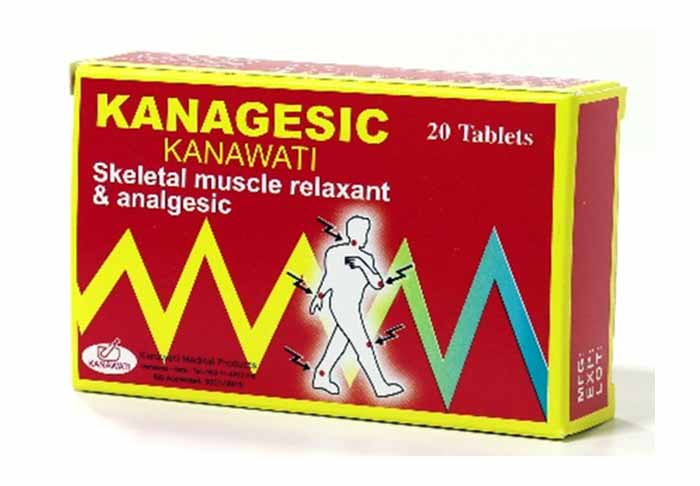
the name
Kanagesic
Lotion symbol
T3
Pharmaceutical form
Tablets
License number and date
121/1991
30/9/1991
Indication
Shelf life
3 years
Quantity
20 Compressed
Installation
Each tablet contains::
Orphenadrine citrate 35 mg
Baracetamol 450 mg
Excipients
Sodium starch glycolate, cornstarch, talc, gelatin, sodium carboxymethylcellulose, povidone, glycerin, magnesium stearate, microcrystalline cellulose, saccharose, methylparaben, propylparaben, green colorant, yellow colorant.
Pharmacological properties and mechanism of action:
Orphenadrine citrate is a centrally acting muscle relaxant and paracetamol is an analgesic and antipyretic.
Orphenadrine/paracetamol is used to treat musculoskeletal disorders and joint disorders. Its pain-relieving effect begins quickly (during 30 minute) It lasts for a while 3 to 4 hours.
Pharmacokinetics:
Orphenadrine is rapidly absorbed from the gastrointestinal tract and is almost completely metabolized. It is excreted mainly in the urine and its half-life is estimated at 14 hour.
Paracetamol is rapidly absorbed from the gastrointestinal tract and peak plasma concentrations are reached after about 10 to 60 Minutes of oral dosing, and the elimination half-life ranges between 1 to 3 hours.
Paracetamol is metabolized primarily in the liver and excreted in the urine mainly in combination with glucuronides and sulfates..
Indications:
Tension headache, occipital headache accompanied by spasm of the skeletal muscles of the head and neck. Alleviating symptoms in acute traumatic cases of the musculoskeletal system, such as: The fetishist (Ligament sprain), stress (Muscle tension), lower back pain, whiplash injury (Hyperextension of the neck muscles following a sudden movement), severe torticollis (Neck twist)Post-operative pain
Contraindications:
Glaucoma, prostatic enlargement or bladder neck obstruction, myasthenia gravis, esophageal spasm and duodenal or pyloric obstruction..
– Hypersensitivity to paracetamol or orphenadrine citrate.
Pregnancy and breastfeeding:
Driving and using machines:
Orphenadrine can impair the ability to perform hazardous activities such as operating machinery or driving a car.
Warnings and precautions:
Orphenadrine citrate should be given with caution to patients with tachycardia, cardiac decompensation, mitral insufficiency, or arrhythmia..
– The safety of long-term treatment with orphenadrine has not been proven, so if it is prescribed for long-term use, blood, urine and liver function should be periodically tested.. Orphenadrine is considered unsafe in patients with porphyria, as it may be associated with severe attacks of porphyria.
– Anesthesia has been reported in predisposed patients.
– Paracetamol should be used with caution in patients with hepatic or renal dysfunction.
Drug interactions:
Concomitant use with other medications containing paracetamol or orphenadrine is not recommended.
– Interactions have been reported between orphenadrine and phenothiazines or other drugs that have antimuscarinic properties..
– Concomitant use of the drug with alcohol or other central nervous system depressants should be avoided.
– The dose of anticoagulant medications may need to be reduced in case of prolonged use of paracetamol.
– Paracetamol absorption increases with drugs that increase gastric emptying, such as metoclopramide, and its absorption decreases with drugs that decrease gastric emptying, such as: Antidepressants with anticholinergic properties and narcotic analgesics.
Paracetamol can increase chloramphenicol concentrations.
– The risk of paracetamol poisoning may increase when used concomitantly with enzyme-inducing agents such as alcohol and anticonvulsants.
Side effects
The occurrence of side effects is mainly due to the anticholinergic effect of orphenadrine and these effects are often associated with high doses. Negative effects include: Dry mouth, tachycardia, urinary retention, blurred vision, nausea, dizziness, constipation, drowsiness.. These effects usually decrease when the dose is reduced.
As in the case of other medicines, the medicine may cause allergic reactions, and mental confusion may rarely appear in elderly people.
Dosage and method of use:
Adults: Two tablets three times daily.
the elderly: Elderly people are advised to take reduced doses because they may be more susceptible to anticholinergic side effects when taking regular doses..
children: Orphenadrine/paracetamol is not recommended for use in children under the age of 12 years.
Overdose:
Includes Symptoms of overdose Orphenadrine: Tachycardia, agitation, confusion and delirium leading to coma. Convulsions, mydriasis, and urinary retention may occur.
Symptoms of paracetamol overdose include:: Vomiting, abdominal pain, low blood pressure, sweating, central stimulation accompanied by euphoria and seizures in children, drowsiness, respiratory depression, cyanosis, coma..
Paracetamol overdose may cause severe liver damage and sometimes acute renal tubule necrosis.
The symptoms that appear during the first and second days of acute paracetamol poisoning do not reflect the severity of the poisoning. The main symptoms of liver failure may take at least three days to appear.
Treatment:
Immediate treatment is essential even when there are no obvious symptoms. Immediate administration of oral activated charcoal may decrease absorption, and concurrent administration of intravenous fluids is recommended. Some cases may require gastric lavage. Acetylcysteine 20% is used intravenously as an antidote for large doses. In order to control seizures and delirium, relatively large doses of diazepam are given, preferably orally.. It is important to ensure adequate hydration for the patient.
Packing:
20 Compressed / Blister
30 Compressed / Package
Preservation and storage conditions:
Store at a temperature below 30 ֯ M
Out of reach of children
WhatsApp us