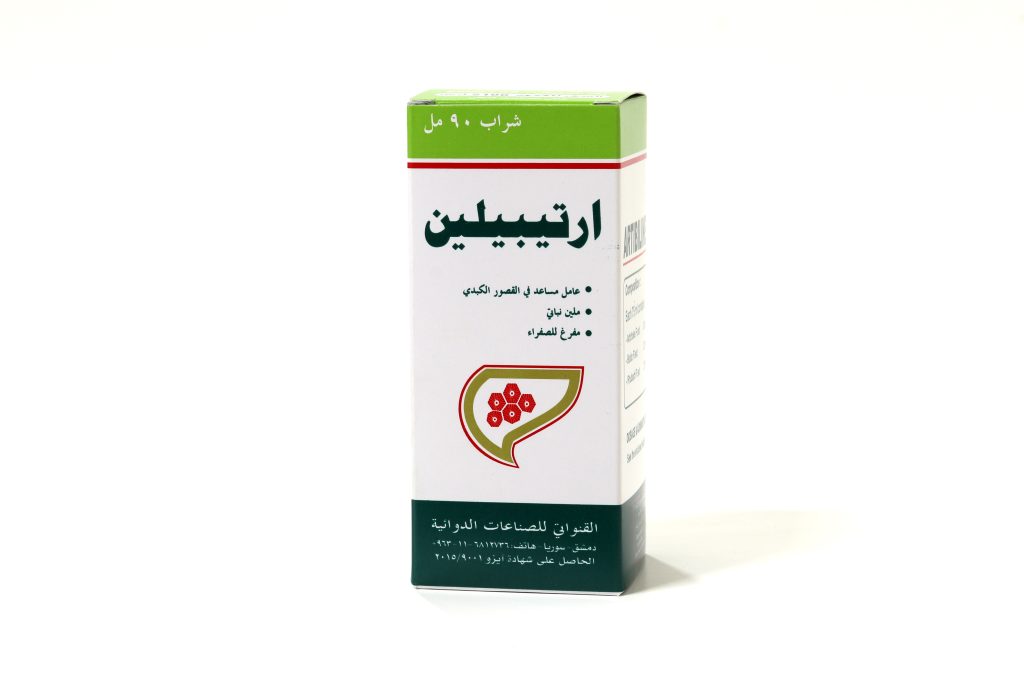
the name
Artibiline
Lotion symbol
Sy-06
Pharmaceutical form
The wine
License number and date
45/2000
04/03/2000
Indication
Laxative and bile secretion
Laxative and choleretic effects
Shelf life
3 year
Installation
Contains all ) 75 Mill( Of Artepilin syrup on:
Liquid artichoke extract …………….. 30 Mill
Liquid boldo gin ……………………….. 20 Mill
Liquid rhubarb extract …………………….. 25 Mill
Excipients
Purified water, alcohol
Pharmacological properties and mechanism of action:
Artepilin syrup has laxative and choleretic properties
The liquid extract of artichoke leaves contains the active ingredient cynarin, which is known for its diuretic effects
And the empty bile. There is evidence that cynarin lowers blood cholesterol, protects the liver, and helps excrete toxic substances )Especially nitrogenous compounds(
From the body. Cynarin has distinctive cholagogue properties )Increases bile production in the liver( And empty of bile )Increases the flow of bile into the gallbladder(،
In addition to being a stimulant for bile duct movement. Artichokes have been used in folk medicine for a long time as a selective treatment for the liver and bile
As well as to treat snake bite. Researchers became aware of its liver-protective and toxin-extracting properties a year ago 1966 Research is still ongoing to reveal the benefits and pharmacological effects of artichoke leaves on liver and bile functions.. It has also been shown that this plant has an effect on fat production and lowering cholesterol
By reducing the speed of cholesterol synthesis in the liver and by moving fat stores from the liver and other tissues such as adipose tissue.
White. It also reduces triglycerides in the blood. Its current uses include treating all liver and bile disorders and preventing the formation of...
Gallstones, as well as treating liver diseases, including alcoholism, indigestion, anemia, atherosclerosis, diabetes, high blood cholesterol, and kidney disease..
The liquid extract of boldo leaves contains a major alkaloid called boldin, which is responsible for the choleretic, laxative and diuretic effects.
for the plant. It also contains boldo glucin glucoside, which has diuretic and choleretic effects in addition to its effect on gallstones.. Boldo has been used historically to treat liver diseases and dissolve gallstones.
The liquid extract of rhubarb also contains anthraquinone derivatives such as chrysophanic acid )Chrysophanol( Emodin, allo-emodin, and lungs with their glycosidic derivatives. It also contains tannins. Rhubarb root has a laxative effect that is useful in treating constipation, but it also has an astringent effect following this
Laxative effect. Therefore, it has a cleansing effect on the intestines by removing waste and its astringent and antiseptic properties. Small doses of rhubarb are prescribed as a tonic
Hepatic, but in large doses it is a laxative.
Pharmacokinetics:
Indications:
Artebelin syrup is used as a laxative, diaphoretic, choleretic, detoxifier, purifier, diuretic, liver protectant, blood cholesterol reducer, and stimulant.
and strong. Artepilline is given as an adjuvant treatment in cases of liver failure and as a herbal laxative in cases of intestinal disorders and severe constipation. Artepilline is beneficial
As a laxative, especially for the elderly. It acts as a laxative in small doses and a laxative in large doses
Contraindications:
nothing
Pregnancy and breastfeeding:
Driving and using machines:
Warnings and precautions:
Artepilline is not given to patients with intestinal obstruction or patients with undiagnosed gastrointestinal symptoms. It should as well
Avoid prolonged use of the product
Drug interactions:
nothing
Side effects
It can occur in some abdominal cramps due to the intestinal irritating effect of anthraquinone derivatives found in rhubarb..
Anthraquinone derivatives can also cause a change in urine color
Dosage and method of use:
Adults: A tablespoon after food 3 Times daily. Or according to the doctor's instructions.
Overdose:
Increasing the dose of artepilline results in severe diarrhea with loss of water and electrolytes, especially potassium. can be processed
Symptoms of overdose include replacing lost water and electrolytes.
Packing:
90 ml glass bottle
Preservation and storage conditions:
Store at a temperature below 30 °M
In a dry place
Out of reach of children
WhatsApp us